
Few would argue that six grand is going to substantially change your life if you live in the west. It’s the kind of money you might pick up from a scratch card or even one of those daytime TV quizzes.
Yet, up to nine million people in the UK are expecting to live on that of money on top of their state pension in retirement, according to new research from Now:Pensions.
It has often been said that in Australia’s super system, member engagement increases when the fund size reaches the value of a new car. This report shows that the UK’s ‘under pensioned’ have private pension incomes of between £3,650 and £6,750. That upper limit might just get you a five year old Ford Fiesta, so it’s a far cry from delivering a meaningful income In retirement.
Those with the an average of around £3,650 in private pensions are those with disabilities, with around 43% of the national average of £8,500 (see graph).
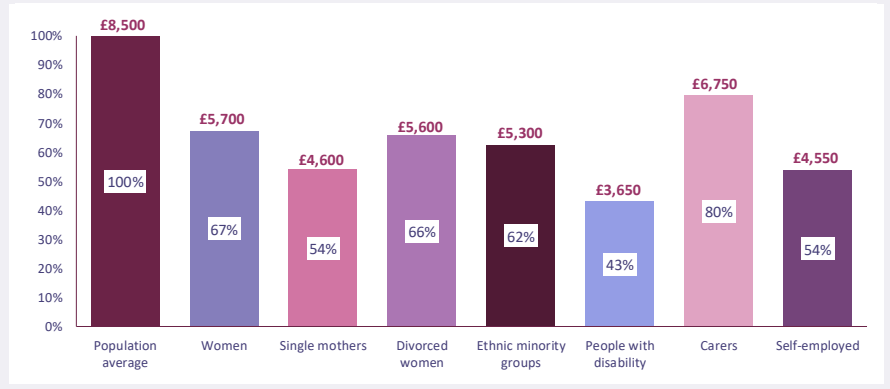
Women continue to be short changed by the system. We know that most carers are women, and this group achieves the upper end of 80% of the average. But in general, women only accumulate 67% – 66% if divorced – while single mothers generate private pension parts of just over half the UK average (54%).
And if you are a divorced single mother who is a carer and you’re self-employed, you’re screwed. While more than 75% of employees currently enjoy membership of a workplace pension, only 20% of the self- employed are saving for their retirement.
To put it in perspective, the midpoint of this range is £5,200 pounds, and you don’t need to be an actuary to calculate that provides just £100 a week on top of any other savings and state pension benefits. The average annual grocery bill for an average family of four is about £5,000 in 2025.
Auto enrolment (AE) has brought more than 11 million people in to workplace pensions. But it’s clear that a lot more needs to be done to ensure UK citizens are not left exposed to financial insecurity in retirement.
Now:Pensions recommends removing the £10,000 AE earnings trigger, scrapping the lower earnings limit on pension contributions, introducing a family carers top up, ensuring pension savings are considered in divorce settlements and taking greater action on child care availability and costs.
Joanne Segars, Now:Pensions chair of trustees, said: “Without further policy action, millions will continue to struggle to achieve a secure retirement.
“These measures would help ensure that everyone, regardless of their working patterns or circumstances, has a fairer opportunity to build a financially secure future.”
This is the third report Now has produced since 2020. While there have been improvements – particularly for women – savings adequacy is not the primary focus of the government’s current pensions reforms (or even the much vaunted and postponed second phase).
Instead, they are focused on consolidation and value for money. Laudable objectives, I’m sure, but they will not substantially move the needle for these groups who will remain significantly exposed to financial insecurity in retirement.
I recently spoke to Lizzie Holliday, director of public affairs and policy at Now: Pensions, about the direction of the government’s reforms and how she would like to see them progress.
You can see the interview with Lizzy here, or if you prefer , there is a separate playlist for some of the individual questions.



 futureproofmoney